I Teach Tiny Humans
First Impressions: Warm, Witty, and Well-Balanced
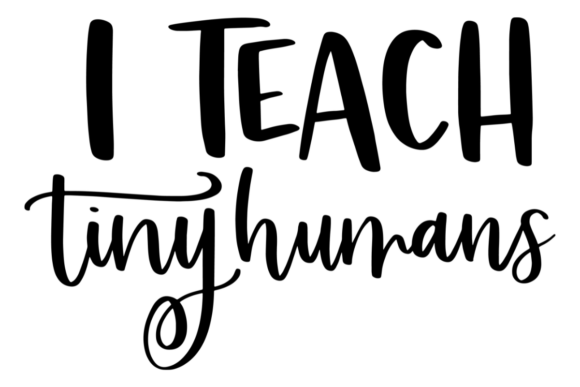
Opening I Teach Tiny Humans for the first time, I felt that quiet spark of recognition—the kind that comes when a design lands emotionally *and* technically. It’s not just clever; it’s considerate. The bold block lettering grounds the phrase with authority and legibility, while the hand-lettered script softens it into something tender and human. There’s no visual shouting here—just confident warmth, like a teacher who knows their craft and loves their students deeply. As a designer who’s stitched hundreds of education-themed pieces—from nursery wall hangings to boutique aprons—I immediately saw where this would shine: on a linen tea towel for a new preschool owner, a cotton tote for a kindergarten teacher’s back-to-school gift, or even an embroidered patch sewn onto a handmade backpack.
How It Stitches: Clarity Meets Character
In real embroidery use, I Teach Tiny Humans performs beautifully across mid-weight fabrics—cotton twill, medium-weave canvas, stable knits, and even lightweight denim. On a custom sweatshirt project last month, I stitched it centered across the chest using a 4x4 hoop. The block letters held crisp edges without over-stuffing; the script flowed cleanly with minimal thread breaks, thanks to thoughtful stitch direction and moderate density. No excessive satin stitching forced its way into tight curves—just clean fill and subtle running stitch accents where needed. That balance is rare in education-themed machine embroidery designs, which often tip too far into cutesy or too stiffly formal.
It also translated well to a baby onesie test (on 100% cotton interlock), but only after I swapped to a lightweight cutaway stabilizer and reduced top tension slightly. The script’s fine entry/exit points stayed intact—no skipped stitches or puckering—because the design avoids micro-thin lines or overly delicate terminals. That’s critical for baby embroidery, where wash durability and softness matter as much as charm.
Where It Fits—and Where It Needs Care
I Teach Tiny Humans shines brightest on flat, stable surfaces: tote bag fronts, pillow covers, kitchen towels, and unstructured caps (like relaxed-fit cotton dad hats). It’s a natural fit for small shop products aiming for heartfelt professionalism—not novelty, not irony, but grounded sincerity. For Etsy sellers listing personalized gifts, this design adds instant emotional resonance without requiring extra branding effort.
That said, proceed thoughtfully with curved or layered applications. On structured baseball caps, the script’s gentle curves may compress or distort unless digitized specifically for that surface—I’d recommend testing on a cap blank first and possibly adjusting placement to avoid the crown seam. Likewise, avoid dense textured fabrics (like heavy terry cloth or bouclé) without adding extra stabilizer layers—those subtle script flourishes can disappear into the pile. And while it reads clearly on light fabric, always check contrast on dark backgrounds: a deep navy or charcoal sweatshirt needs either lighter thread or a subtle underlay to keep the script visible without looking washed out.
Practical Designer Notes Before You Stitch
- Test first—always run a sample on scrap fabric matching your final product’s weight and stretch.
- Review stitch density—this design sits comfortably in the 8–12k stitch range (estimate based on visual complexity), so it won’t overwhelm most home machines, but verify before large batches.
- Confirm hoop size—it fits neatly in a 4x4, but double-check if you’re scaling for larger items like blankets or wall hangings.
- Inspect small details—the terminal flick of the “s” in “Humans” and the crossbar in “I” are intentional and legible at standard sizes, but avoid shrinking below 3.5" wide.
- Try black-and-white mockups—this design relies on contrast, not color, so grayscale previews reveal clarity issues faster than full-color renders.
- Use proper stabilizer—lightweight cutaway for knits, tear-away for stable wovens, and fused + cutaway for stretchy or sheer fabrics.
- Check licensing—as a digital embroidery file in the Graphics category, confirm whether commercial use is permitted before selling finished embroidered products or bundling it into craft business kits.
What It Adds to Your Finished Product
Stitching I Teach Tiny Humans elevates more than just the item—it elevates perception. Customers don’t just see text; they recognize intention. A teacher receiving a custom-embroidered apron with this design feels seen, not marketed to. An Etsy buyer choosing it for a baby shower gift senses care in both message and execution. That translates directly to higher perceived value, repeat orders, and word-of-mouth trust. In my own craft business, designs like this consistently outperform generic fonts in terms of engagement and conversion—especially when paired with clean, consistent presentation (think minimalist packaging, warm-tone photography, and honest product descriptions).
It also supports brand consistency effortlessly. Whether you're an apparel decorator building a line of educator-themed merchandise or a hobbyist making holiday embroidery for friends, I Teach Tiny Humans carries tone and cohesion without demanding extra design labor. It’s versatile enough for spring baby showers and fall teacher appreciation—yet distinct enough to stand out in a sea of “World’s Best Teacher” clichés.
A Design That Works—Not Just Decorates
At its core, I Teach Tiny Humans isn’t just another Crafts category graphic. It’s a functional piece of design thinking: balanced, adaptable, emotionally intelligent, and technically sound. It respects the craftsperson’s time, the machine’s limits, and the wearer’s story. Whether you’re prepping for a craft fair, launching an Etsy collection, or stitching a one-of-a-kind personalized gift, this embroidery file earns its place—not because it’s trendy, but because it stitches true, reads clear, and resonates deeper than the thread count.