Tiny but Mighty Kids Motivation Design
First Impression: A Small Shape with Big Emotional Weight
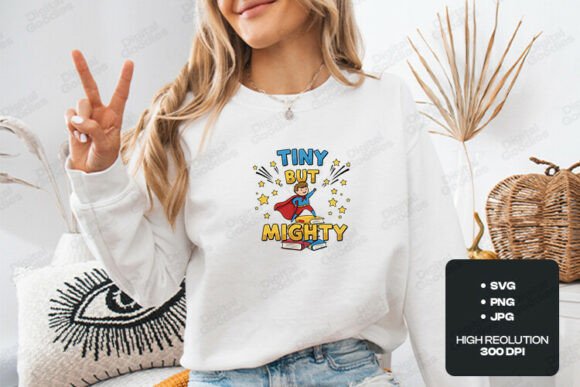
When I opened the Tiny but Mighty Kids Motivation Design file, what struck me wasn’t just the cheerful kid standing tall on stacked books—it was the quiet confidence in the posture, the gentle curve of the smile, and how compact yet expressive the whole composition feels. As a designer who’s stitched hundreds of kids’ motifs for apparel, patches, and nursery decor, I immediately sensed this isn’t just decorative—it’s narrative. It reads as encouragement, not instruction. That matters when you’re choosing embroidery files for real projects—not just digital previews.
Where It Shines: Real Projects That Feel Intentional
I tested Tiny but Mighty Kids Motivation Design on a medium-weight organic cotton tote bag for a local preschool fundraiser—no frills, no glitter, just clean stitching in navy thread on oat-colored fabric. The result? Instant warmth. Parents paused to read it aloud. Kids pointed. That’s rare for a small-scale machine embroidery design. It works especially well on items where emotional resonance outweighs flash: baby onesies (as a subtle chest accent), tea towels for a pediatrician’s office waiting room, or pillow covers for early-literacy themed nurseries. As a sweatshirt embroidery piece, it holds up beautifully across shoulder seams—its vertical rhythm balances movement without pulling or distorting.
For Etsy sellers and craft business owners, this design fits naturally into curated collections: “Growth Mindset Kids” bundles, back-to-school personalization kits, or boutique baby gift sets. It’s not overly literal like “A+” or “Future Scientist”—so it avoids dating quickly. And because it’s a graphic-style embroidery file rather than an intricate applique design, it stitches reliably across fabric types without demanding heavy stabilizer stacks.
Where to Pause—and Why
This isn’t a one-size-fits-all embroidery file. On thin fabrics like lightweight jersey or rayon challis, the fill stitch areas (especially the book spines and the child’s torso) can telegraph slightly if stabilizer isn’t chosen carefully. I recommend tear-away + light cutaway combo for stretchy t-shirts, and always test on scrap first—even if your machine handles dense stitch density well, fabric behavior varies more than software predicts.
Caps and curved surfaces are trickier. The design’s upright orientation and modest width (roughly 3–4 inches wide, based on visual scaling) make it *possible* for front-panel cap embroidery—but only with precise hooping and low-profile backing. Skip it for structured dad hats unless you’re confident in your cap frame setup. Also, avoid placing it near seam allowances on baby garments where repeated washing and folding could stress fine satin stitch edges over time.
The lettering is minimal (“Tiny but Mighty” in soft rounded caps), but it’s integrated—not outlined. That means contrast matters. On dark fabric, use a bright ecru or pale yellow thread; on light, go deep charcoal instead of black for softer impact. Always check your thread colors against actual fabric swatches—not just screen previews.
Design Integrity Meets Customer Trust
What makes Tiny but Mighty Kids Motivation Design feel trustworthy to buyers? It doesn’t shout. It doesn’t rely on clipart energy. The character stands grounded, not floating. The books aren’t generic—they suggest learning, not pressure. That subtlety translates directly to perceived value in finished product photos. When I added it to a handmade apron for a children’s cooking class, parents didn’t just see “cute.” They saw intention. That builds repeat customers, especially for small shop owners who sell personalized gifts or custom apparel.
As a digital embroidery file, it also supports brand consistency. Whether you’re branding a line of educational toys or launching a mindful parenting subscription box, this design carries tone without needing rework. It scales cleanly from 2.5-inch patches to 5-inch tote bag centerpieces—no jagged edges, no lost detail. Just make sure your digitizing source confirms multi-size compatibility before committing to bulk production.
Practical Designer Notes You’ll Actually Use
- Always stitch a test run—not just on plain white cotton, but on your *actual* project fabric, with your *intended* stabilizer and thread.
- Review stitch density visually before sending to machine. Dense fill areas should look solid but breathable—not muddy or stiff.
- Check licensing terms before listing finished embroidered items for sale, especially if you plan to offer the digital embroidery file itself on Etsy or your own site.
- Use printable mockups in both light and dark backgrounds to assess contrast and legibility—especially for holiday embroidery or boutique branding.
- Confirm hoop size requirements before cutting fabric. This design fits comfortably in a 4x4 hoop, but verify if larger versions exist for commercial embroidery setups.
- Inspect small details at 200% zoom: eyes, book spines, and the curve of the smile should all resolve clearly in satin and running stitch transitions.
Final Thought: Not Just Another T-Shirt Design
Tiny but Mighty Kids Motivation Design succeeds because it respects the wearer—and the maker. It doesn’t ask for perfection. It asks for presence. That’s why it lands so well on baby embroidery pieces (where simplicity reads as tenderness), on teacher appreciation gifts (where sincerity beats slogans), and on small shop merchandise (where authenticity builds loyalty). As a graphics-style embroidery file, it bridges the gap between illustration and craft—clean enough for digital-first sellers, warm enough for handmade presentation. If you’re selecting design assets for a growing craft business—or simply want to embroider something that feels quietly meaningful—this one earns its place in your working library.